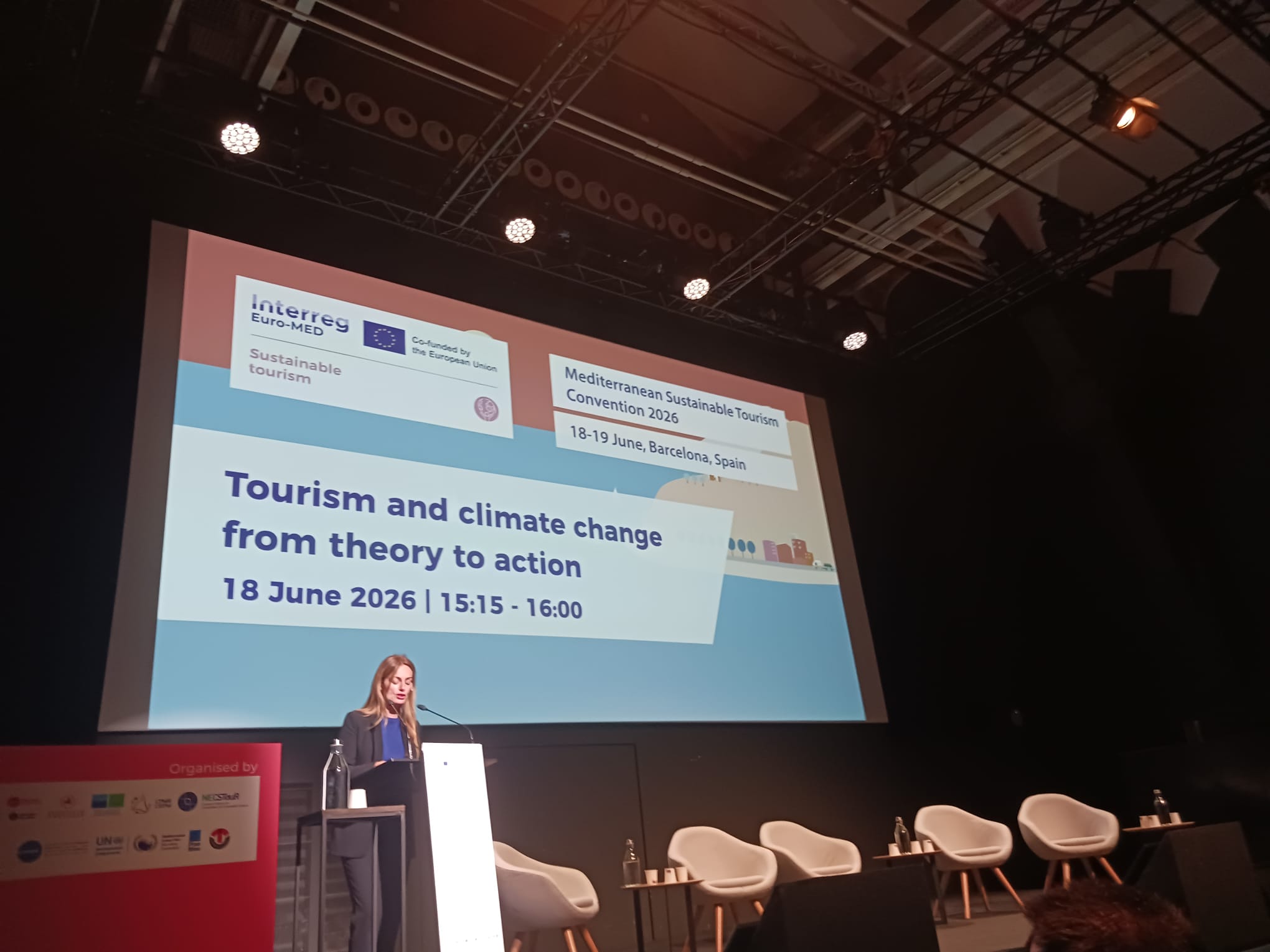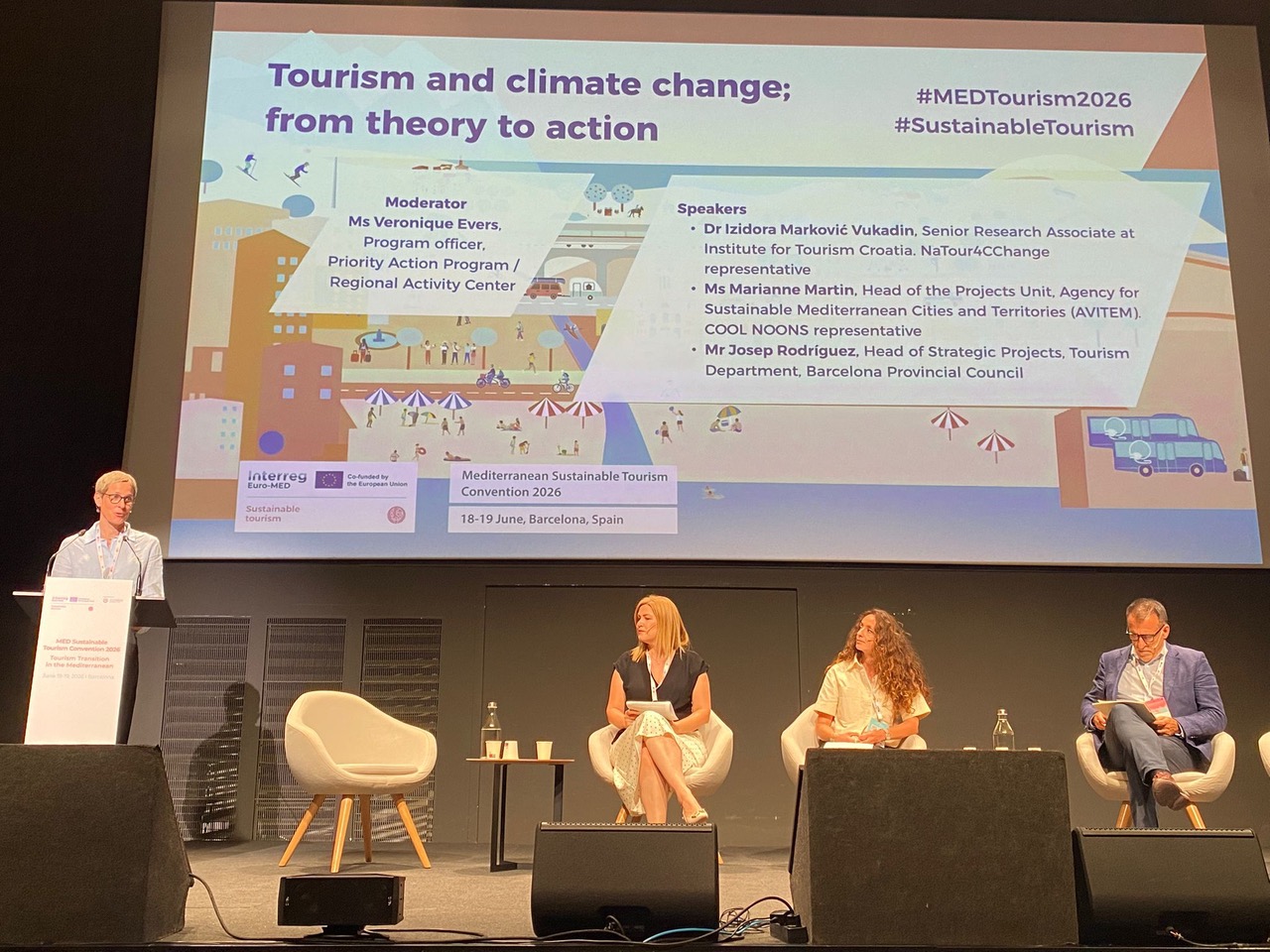

15:15 – 16:00. Panel : Tourism and climate change; from theory to action
Panelist :
- Dr Izidora Marković Vukadin, senior Research Associate at Institute for Tourism Croatia. NaTour4CChange representative.
- Ms Marianne Martin, Head of the Projects Units of the Agency for Mediterranean Cities and Territories (AVITEM). COOL NOONS representative
- Mr Josep Rodríguez, Head of Strategic Projects, Tourism Department, Barcelona Provincial Council
Question #1: “The Mediterranean is increasingly affected by extreme heat, especially in urban destinations. Through the COOL NOONS project, what concrete adaptation measures are being tested to make tourism destinations more climate-resilient?” (5 minutes)
The Interreg Euro-MED COOL NOONS project brings together five Mediterranean cities facing a common challenge: adapting urban tourism to increasingly frequent and intense heatwaves caused by climate change.
The project involves Dubrovnik, Marseille, Imola, Lisbon and Budva, all attractive tourist destinations that are highly exposed to extreme heat. They worked together with two academic partners: the University of Coimbra, which provided scientific expertise on thermal comfort and climate assessment, and the American College of Greece, which developed the participatory methodology used throughout the project.
COOL NOONS is based on a simple idea: helping residents and visitors move through cities during the hottest hours of the day by creating Cool Paths. These are routes connecting naturally cooler places such as parks, shaded streets, water points, museums, cultural facilities and other climate refuges.
The first step was to identify these routes through a large citizen participation process. Residents, local stakeholders and tourism actors took part in exploratory walks and co-design workshops to share their knowledge of the city and identify places that remain comfortable during periods of extreme heat.
Once these Cool Paths had been mapped, the project financed a series of pilot interventions through the Interreg Euro-MED programme. Rather than large-scale infrastructure projects, the focus was on light and easily replicable solutions.
These interventions included:
- street greening through the planting of trees, shrubs and climbing plants;
- shaded urban furniture and pergolas;
- fountains and drinking water points;
- digital maps allowing residents and visitors to easily locate Cool Paths and climate refuges.
Each city adapted the concept to its own context.
In Marseille, nine pergolas were installed along Cool Paths and additional vegetation was introduced in public spaces.
In Imola, new fountains, shaded seating areas and tree planting improved thermal comfort in key public spaces.
In Budva, the city combined tree planting, shade structures and water points to create more comfortable pedestrian routes.
In Dubrovnik, the focus was placed on digital innovation, with an online platform helping visitors identify the coolest routes according to the time of day. The city also enhanced the visitor experience of its Maritime Museum, transforming it into a recognised climate refuge.
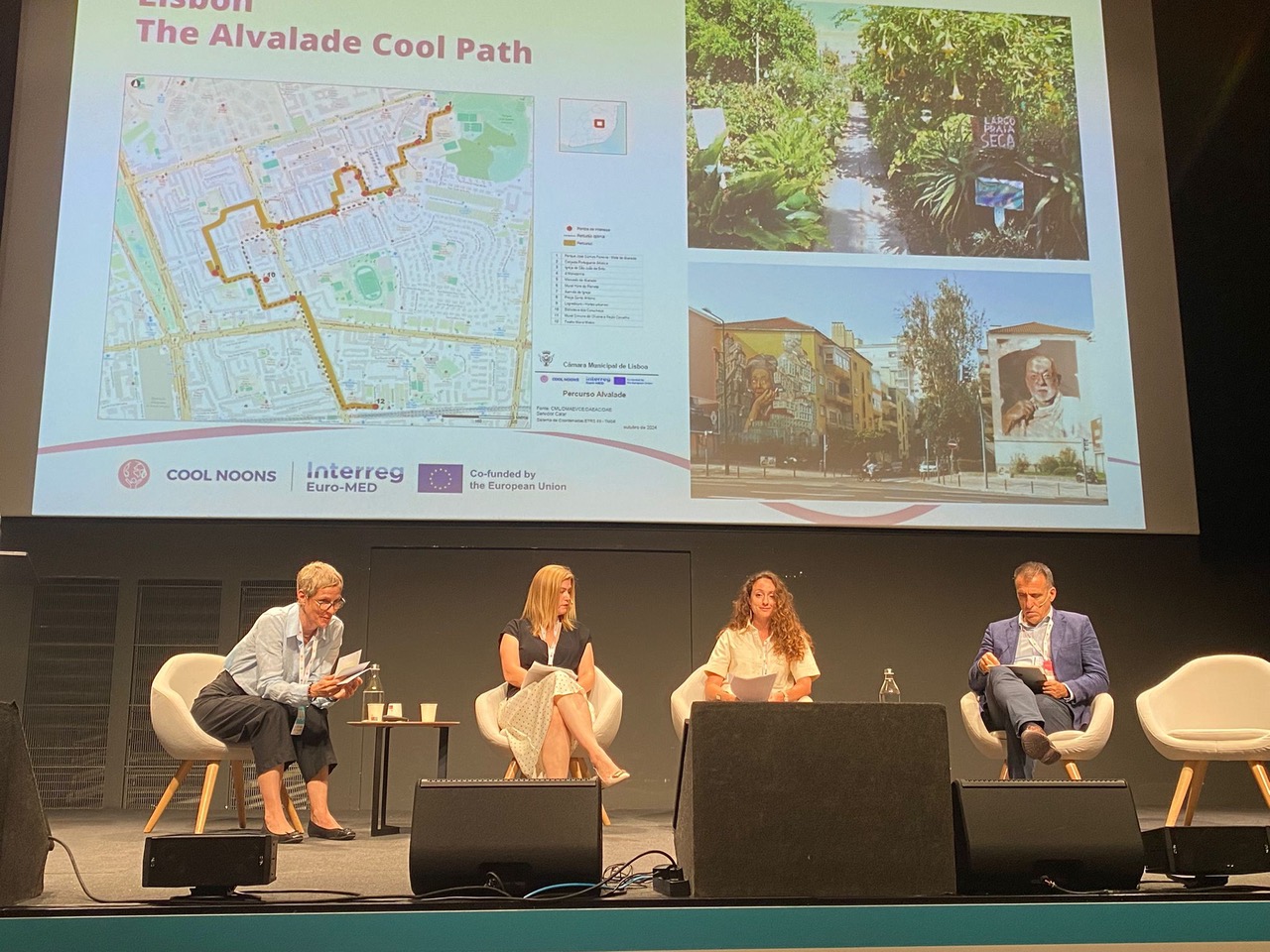
One particularly interesting example comes from Lisbon, where Cool Paths were used to encourage visitors to discover neighbourhoods and green spaces beyond the city’s most crowded tourist areas.
One route guides visitors through the Alvalade district, connecting parks, local shopping streets, community gardens and a municipal theatre. Another links the city centre to Monsanto Forest Park, a vast green area where summer temperatures can be up to 15 degrees lower than in exposed urban spaces.
These routes were improved through participatory planting activities involving local residents and schools, transforming underused urban spaces into small climate refuges.
Beyond the pilot actions themselves, one of the most important achievements of COOL NOONS is the development of a methodology that can be replicated across the Mediterranean.
Several practical deliverables have been produced and are available on our website, including:
- a methodology for thermal vulnerability assessment;
- digital tools for mapping Cool Paths;
- a Design Thinking methodology for citizen participation;
- a cross-cultural evaluation guide to help cities choose the most appropriate interventions;
- and policy recommendations to better integrate heat adaptation into urban and tourism strategies.
The objective is not to provide ready-made solutions, but rather a flexible framework that cities can adapt to their own realities.
Building on these results, COOL NOONS has applied to the Interreg Euro-MED Transfer Mission in order to replicate the methodology in new territories, including Athens, Valencia, Campobasso and Corte.
We are currently awaiting the results of this application and hope to continue supporting Mediterranean cities in developing Cool Paths and adapting their public spaces and tourism models to a warmer future.